
How to Wear a Wedding Ring: Which Hand, Which Finger & Wedding Ring Traditions

Updated: Aug 8

Wondering how to wear a wedding ring?
Whether you're preparing for your wedding or simply curious about wedding ring traditions, many couples ask the same questions: Which hand should you wear your wedding ring on? Which finger is the correct one? While traditions vary across cultures, there are no strict rules—only meaningful customs and personal preferences.
Table of Contents

The History of Wedding Rings
Have you ever wondered why we wear wedding rings? Today, the wedding ring is recognised around the world as a symbol of love and commitment, but understanding the history behind it can also help explain modern traditions, including how to wear a wedding ring and why different cultures wear it on different hands.
Let's explore how the wedding ring evolved in both Western and Eastern traditions—and how it became one of the most meaningful symbols of marriage.
The Origins of Wedding Rings in Western Culture
The earliest wedding rings are often traced back to Ancient Egypt, where the circle was seen as a powerful symbol of eternity. With no beginning and no end, its endless shape represented everlasting love and an unbroken bond between two people.
Over time, this tradition spread to Ancient Rome, where rings took on additional meaning. Beyond symbolising affection, they also represented a formal agreement between families and served as a sign of marriage. Early Roman wedding rings were commonly made from iron, reflecting strength, permanence, and the responsibilities that came with marriage.

As wedding traditions evolved across Europe, exchanging rings gradually became an important part of the marriage ceremony. Today, this custom continues around the world, with the wedding ring representing lifelong love, commitment, and partnership.
The Origins of Wedding Rings in Eastern Culture
The history of rings in Eastern cultures followed a different path. In ancient China, rings were initially associated with practical use like archery and later became decorative accessories that reflected social status and personal identity. Different materials and designs often indicated a person's wealth or rank rather than their marital status.
It wasn't until later dynasties that rings began appearing in literature and traditional stories as symbols of love and engagement. While rings could be exchanged as tokens of affection, they were only one of several customs associated with marriage.

The tradition of exchanging wedding rings as the central moment of a wedding ceremony became widely adopted much later, influenced by the introduction of Western-style weddings in the late Qing Dynasty and early Republican period. Over time, this practice became increasingly popular throughout East Asia, blending local traditions with modern expressions of love and commitment.
Which Hand Should You Wear Your Wedding Ring?
The moment you slip on your wedding ring, it becomes more than just a beautiful piece of jewellery—it represents a lifelong promise and commitment. But should you wear your wedding ring on your left hand or your right? And why do traditions differ around the world?
The answer depends largely on culture, history, and personal preference. While there is no universal rule, understanding the traditions behind wedding rings can help you decide what feels most meaningful for you and your partner.
Wedding Ring Traditions Around The World
Today, many people wear their wedding ring on the left ring finger, but this tradition isn't universal. Around the world, different cultures have their own customs, each shaped by history and symbolism.

Left Hand Tradition
In countries such as the United States, the United Kingdom, Canada, Australia, Japan, Singapore, and much of Western Europe, wedding rings are traditionally worn on the left ring finger.
This custom is often linked to the ancient Roman belief in the Vena Amoris, or "vein of love", which was thought to connect the left ring finger directly to the heart. Although modern anatomy has shown that this isn't literally true, the romantic symbolism has endured for centuries and remains one of the most recognised wedding traditions today.
Right Hand Tradition
In contrast, countries including Germany, Norway, Russia, Greece, and parts of Eastern Europe traditionally wear wedding rings on the right hand. In these cultures, the right hand is often associated with honour, strength, or the taking of vows.
You may also come across traditional Chinese beliefs suggesting that men wear their wedding ring on the left hand while women wear it on the right. While this custom is still recognised in some families, it is less commonly followed today, particularly in multicultural societies like Singapore.
Ultimately, there is no "correct" hand to wear your wedding ring. Whether you choose to follow family traditions, cultural customs, or simply wear the ring where it feels most comfortable, the meaning behind the ring remains the same.
Engagement Ring vs Wedding Ring
Although the terms are often used interchangeably, an engagement ring and a wedding ring mark different milestones in your journey together.


When is it given? | During marriage proposal | Exchanged during the wedding ceremony |
What does it symbolise? | A promise to marry | Lifelong commitment and marriage |
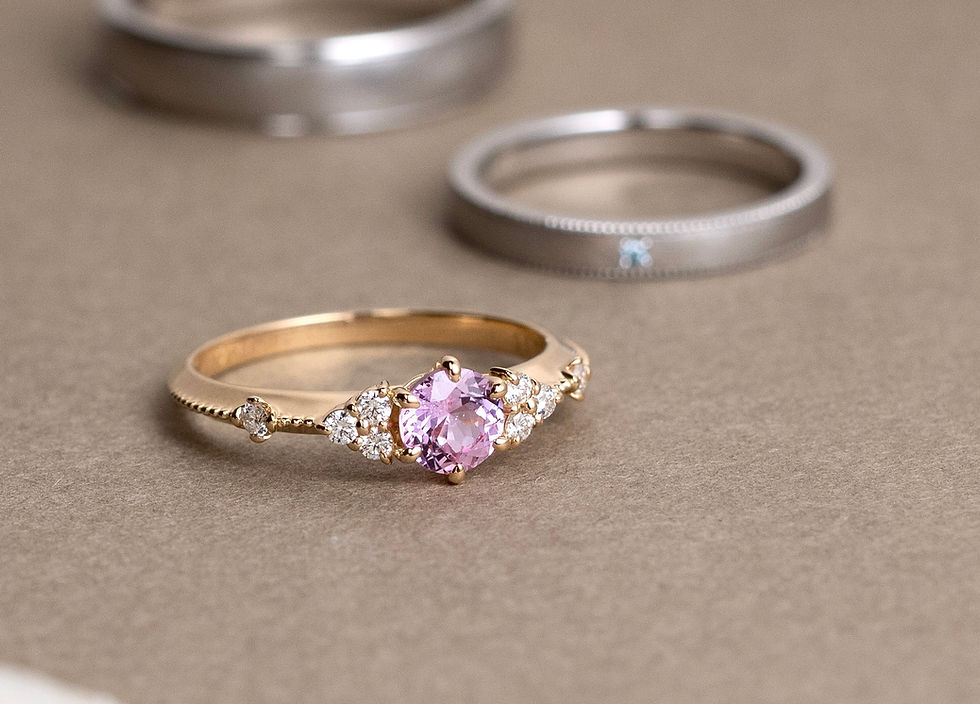
Typical design | Features a centre diamond or coloured gemstone | Usually a simpler band designed for everyday wear |
When is it worn? | From the proposal onwards | After the wedding ceremony, often alongside the engagement ring |
Many brides choose to wear both rings together after the wedding. Traditionally, the wedding band is worn closest to the heart, with the engagement ring worn above it. However, there is no strict rule—some prefer wearing only one ring, while others choose a ring stack that best suits their personal style and lifestyle.
Which Hand and Finger Should You Wear Your Wedding Ring?
Traditionally, wedding rings are worn on the ring finger, also known as the fourth finger, of either the left or right hand depending on cultural customs.

The tradition of wearing a wedding ring on the ring finger dates back to ancient times. The Romans believed that a vein, known as the Vena Amoris or "vein of love", ran directly from the left ring finger to the heart. Although this idea has since been disproven, the symbolism has endured for centuries and continues to represent love, commitment, and lifelong partnership.
Today, most couples simply follow the customs of their country or family. In many Western countries, Japan, and Singapore, wedding rings are typically worn on the left ring finger. In other parts of Europe and some Eastern traditions, the right ring finger is more common.
Ultimately, there is no universal rule. The most important thing is choosing a tradition that feels meaningful to you and your partner.

Consult our jewellery consultants for expert advice on choosing your wedding rings.
Wedding Rings FAQ
Here are some frequently asked questions on how to wear your wedding rings:
Q1: Which hand should I wear my wedding ring on?
Traditionally, wedding rings are most commonly worn on the left hand’s fourth finger (ring finger) in many countries, including Japan, the United States, and much of Europe. However, customs differ around the world, and there is no single rule that applies everywhere.
Today, many couples choose the hand that feels most meaningful to them, whether based on cultural traditions, personal preference, or comfort.
Q2: Why is a wedding ring worn on the left ring finger?
The tradition of wearing a wedding ring on the left ring finger is often linked to the ancient belief in the “vena amoris”, meaning the “vein of love,” which was believed to connect this finger directly to the heart.
Although modern anatomy has shown that this vein does not actually exist, the symbolism remains — making the left ring finger a meaningful place to wear a wedding ring as a representation of love and commitment.
Q3: Can I wear my wedding ring on my right hand?
Yes. Wearing a wedding ring on the right hand is a meaningful choice for many people around the world. Some choose it because of cultural traditions, personal beliefs, comfort, or simply because it feels right for them.
Q4: Do men and women wear wedding rings on the same finger?
Yes. In most cultures, both partners traditionally wear their wedding rings on the same finger. However, couples may choose different styles or placements based on personal preference and lifestyle.
Q5: What matters most when choosing a wedding ring?
Beyond traditions and customs, the most meaningful wedding ring is one that reflects your story as a couple. From the gemstone you choose to the craftsmanship behind each detail, your ring becomes a symbol of the moments you share and the memories you create together.
Consult our jewellery consultants for expert advice on choosing your wedding rings.
Discover Handcrafted Wedding Rings at Fujimori Kajita
A wedding ring is more than a symbol of marriage—it becomes part of your everyday life and a reminder of the promises you share.

At Fujimori Kajita, each wedding ring is handcrafted in Japan and made to order for every couple. From timeless designs to rings crafted using our signature Tanzo forging technique, every piece reflects the care, precision, and craftsmanship of our Japanese artisans.


Designed to be worn for a lifetime, our wedding rings can be personalised with your choice of precious metal, finish, width, and engraving, creating a ring that is uniquely yours.
Visit our boutique to discover a wedding ring that tells your story and will be treasured for generations.


Comments